Maui Housing Hui has been working on our second dataset examining the housing crisis through surveying our community members. Our research process centers around the idea of elevating community voices, as we recognize the true experts on housing are those living the experience. Maui residents have been clear: the housing crisis is not only about whether a home is available. It is about whether local people can remain safely, stably, and affordably housed in the communities they call home.
This is an early, preliminary look at an ongoing community housing survey. The responses are not a countywide, representative sample, and this analysis is not the final report. But the experiences shared so far point to urgent, recurring challenges—especially for renters and people whose housing, income, and sense of security were disrupted by the August 2023 wildfires.
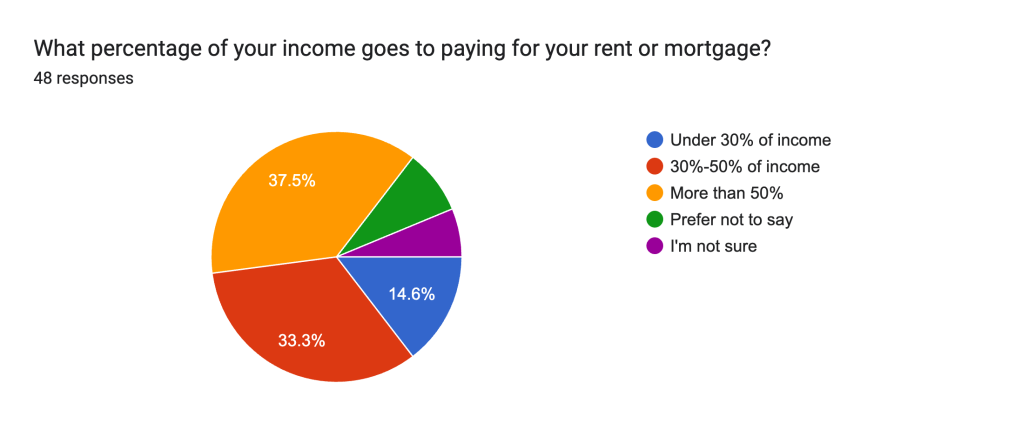
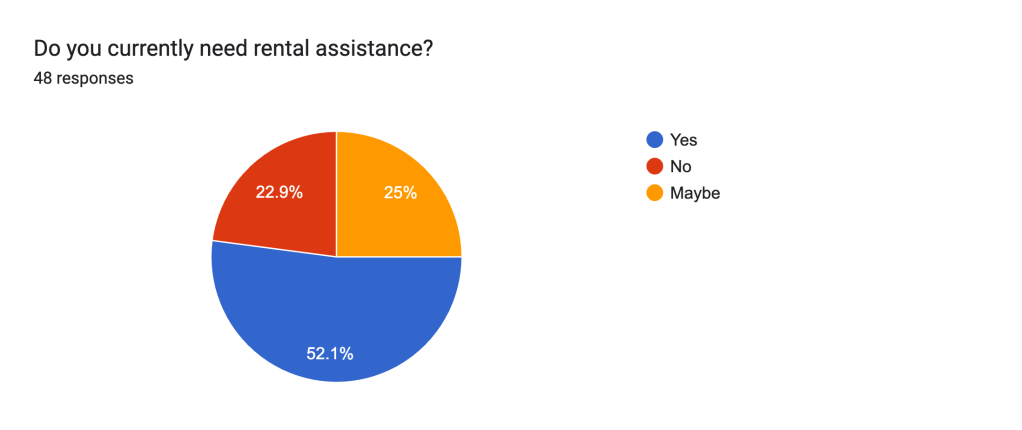
Our preliminary analysis of 48 survey responses shows a community facing serious housing instability. 32 respondents [66.7%] who answered the housing-status question identified as renters. Among those who reported their housing-cost burden, 18 respondents [37.5%] said they spend more than half of their income on rent or mortgage.
A crisis of instability
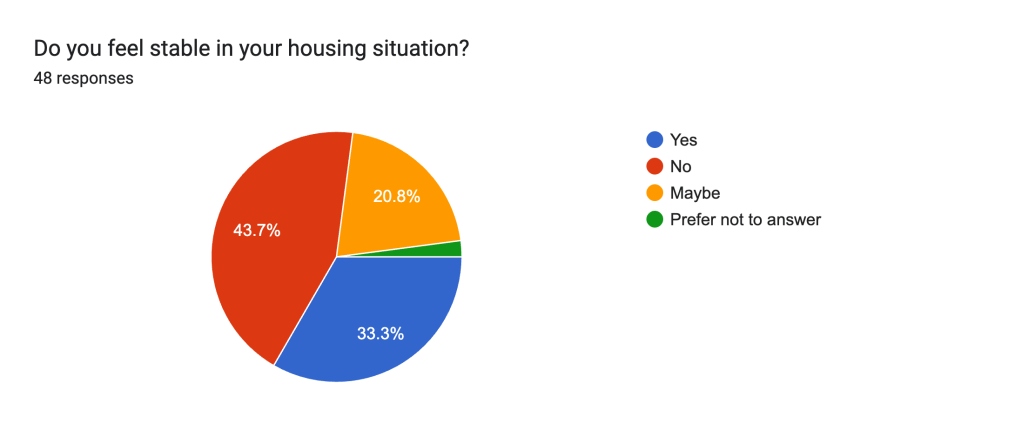
Across the survey, renters describe housing as precarious and difficult to sustain. Many respondents report paying a large share of their income toward rent or mortgage leading to cost-burdened and severe cost-burdened status. The survey also asks about frequent moves, including moves since the fires, underscoring that for many households, housing instability is an ongoing condition rather than a one-time emergency.
Respondents identify multiple pressures that can force a move:
- Unexpected or anticipated rent increases
- Housing that has become unaffordable
- Nonrenewal of a lease
- Property sales
- Unsafe living conditions
- Eviction, landlord retaliation, and displacement related to the wildfires
These experiences show that Maui’s rental crisis is not simply a matter of high prices. It is also a crisis of predictability, safety, and power. A household can be working, paying rent, and still be one rent increase, property sale, or lease nonrenewal away from losing its home.
Wildfire survivors face a longer recovery
For wildfire survivors, the housing crisis compounds the trauma and losses of the fires. Survey participants report displacement due to the disaster, loss of employment or reduced work hours, and continuing uncertainty about where they will live next. Some are in interim or temporary housing; others identify FEMA Direct Housing, Ka Laʻi Ola, or other assistance programs as part of their current situation.
The need does not end when an immediate shelter placement is made. Recovery requires stable, long-term options that households can afford after temporary assistance changes or ends. Survivors are navigating a rental market that respondents describe as having scarce availability, high costs, and intense competition. One respondent summarized the challenge plainly: “Prices are high, availability is low, [and] wages are not compatible.”
For families who lost jobs or experienced reduced income after the fires, the gap between wages and rent can make recovery feel out of reach. Another respondent described how the loss of a job after the fire left their household reliant on one income, making affordable rent “almost impossible” to find.
Renters need more than listings
Survey responses suggest that finding a rental is itself a difficult and risky process. Residents report searching through Craigslist, Facebook, Zillow, Apartments.com, and personal networks such as friends, family, and word of mouth. When a household’s ability to stay on Maui depends on informal connections, it can leave those without established networks at a severe disadvantage.
Respondents also raise concerns that go beyond monthly rent:
- Not having a written lease
- Fear or discomfort reporting housing violations
- Extra pet deposits or rent charges
- Poor or unsafe living conditions
- Difficulty finding rentals that allow pets
- Concerns about application-fee scams and price gouging
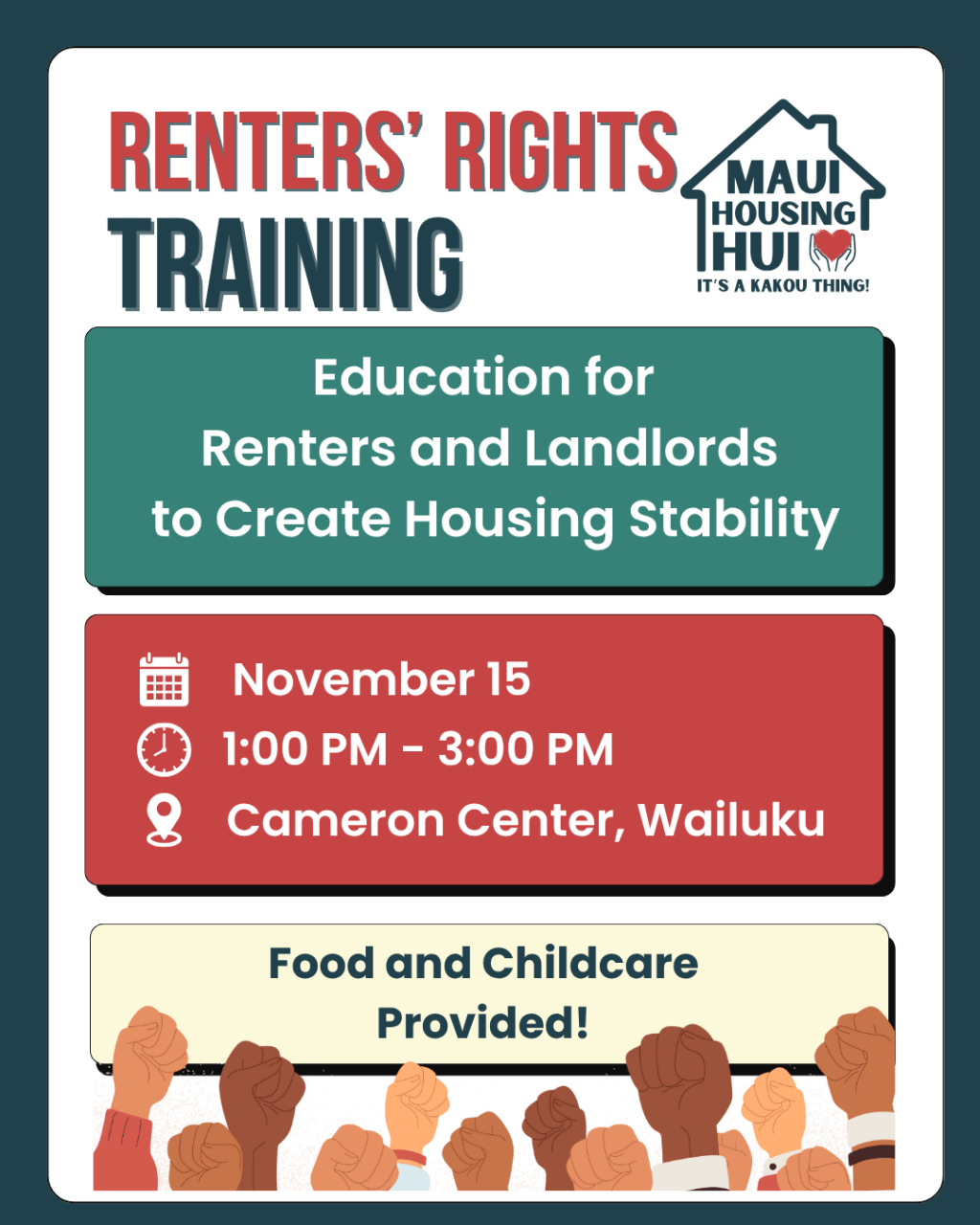
These findings point to the importance of renter protections, accessible legal and navigation support, transparent rental practices, and enforcement systems that residents can safely use.
The risk of losing local community
The survey asks whether people are considering leaving Maui because of the cost of living, the difficulty of finding housing they can afford, or the impacts of the fires. Many respondents’ written comments make the stakes clear: people do not want to leave, but they are questioning whether they can stay.
One respondent wrote that it is “nearly impossible to afford rent on Maui on an average income unless you have friends or family willing to help or give you a deal.” Another described a painful gap in the current system: households may earn too much to qualify for income-restricted housing but still not earn enough to afford market rents.
When renters are forced to leave, Maui loses more than individual households. It loses kūpuna, families, workers, caregivers, cultural knowledge, community relationships, and the people who keep neighborhoods connected and local institutions running. The cultural costs compete with the monetary costs in a race to the bottom.
What comes next
These early findings reinforce the need for a recovery and housing strategy that centers renters, wildfire survivors, and local residents facing the greatest risk of displacement. That includes:
- Stable, genuinely affordable long-term rental homes
- Stronger protections against displacement and excessive rent increases
- Safe, accessible pathways for reporting housing violations
- Sustained assistance and housing navigation for wildfire survivors
- Support for households who are excluded from both market-rate housing and many affordable-housing eligibility thresholds
- Continued community-led data collection so policy responds to lived experience
This survey remains open, and the analysis is ongoing. As more residents participate, we will continue reviewing the data carefully, identifying trends, and sharing findings that can help guide policy, funding, and partnership decisions.
The message emerging so far is urgent: Maui residents are doing everything they can to stay, but too many renters and wildfire survivors are being asked to carry an unsustainable burden. The community deserves housing solutions that make it possible not merely to find shelter, but to remain rooted, safe, and at home on Maui.

 Maui Housing Hui
Leave a comment