The University of Hawaiʻi Economic Research Organization (UHERO) recently released a new socioeconomic report that sheds light on the growing housing instability and rising poverty on Maui. This detailed analysis offers a sobering look at how the wildfires have intensified the already-precarious situation for thousands of residents. In this post, we’ll dive into the report’s key findings, particularly how they relate to the ongoing housing crisis and the urgent need for long-term solutions to support our community.
It’s been a year since wildfires devastated our beautiful island of Maui. What started as a natural disaster has become a long-term housing emergency. Many of us have either directly experienced the crisis or most certainly know someone who has. Whether it’s displacement, struggling to find affordable housing, or the uncertainty of what comes next, the reality is clear: our housing system was fragile long before the wildfires, and now it’s breaking under pressure.
The Aftermath: How the Fires Made Everything Worse
Before the fires, Maui was already grappling with a severe housing shortage. Affordable housing was a distant dream for many, with rising rent prices and limited availability making it nearly impossible for working families to find stable homes. When the fires hit, they destroyed nearly 2,000 residential structures, wiping out entire neighborhoods in Lahaina and Kula. Thousands of residents were left without homes, adding to the number of people already struggling to find safe, affordable housing.
According to the data in the UHERO report, roughly 3,500 families are now displaced, with many forced into temporary shelters, hotels, or crowded living arrangements with extended family. And while the immediate response brought some relief, like short-term shelter and food, the long-term housing needs are overwhelming and growing every day.
Rising Rents and Limited Options
If you’ve tried to rent an apartment or home in the past year, you know how tough the market has become. The average rent for a two-bedroom apartment in Maui has shot up to $3,500 a month, an increase of 12% since the fires, according to this study. This has forced families to make tough choices—either overextend their budgets, crowd into smaller spaces, or leave the island altogether. For many, leaving is simply not an option. This housing squeeze affects everyone, but it’s particularly devastating for our low-income families, kupuna (elders), and essential workers.
Affordable Housing: Still Out of Reach
In theory, there are programs meant to help those struggling with housing insecurity. Yet, the waitlists for affordable housing units are long, with over 4,000 people still waiting for a place to call home. Even the units that are supposed to be “affordable” are often out of reach for local families. The median household income in Maui is about $84,000, but to afford even a modest rental without being rent-burdened (spending more than 30% of income on rent), a family would need to make closer to $120,000 a year.
The Need for Long-Term Solutions
While there have been efforts by the government and non-profits to address the immediate needs of displaced residents, long-term solutions are still unclear. Many of us in the housing advocacy community are calling for a wide variety of solutions. Collectively, many changes must be made to create meaningful relief for those caught in this housing nightmare. This includes:
- Increased investment in affordable housing development. It’s not enough to rebuild what was lost; we need to ensure that the new housing is affordable for local residents, not just vacation rentals or luxury condos. To actually build affordable housing, our issues with slow permitting and access to water must also be addressed.
- Greater protections for renters. With rent prices skyrocketing, we need stronger protections for tenants to prevent evictions and price gouging. Limiting how high and how often landlords can raise rents would be a great place to begin. Supporting just cause evictions and right to renew leases would help increase stability for renters to stay housed. If renters can remain in their homes, that takes some pressure off of the market, with fewer families competing for the already slim inventory.
- Support for displaced families. Many displaced by the fires are still living in temporary conditions. They need more than just emergency relief; they need permanent, stable housing options. One of the many challenges for displaced families is the uncertainty of what comes next. It cannot be overstated how difficult it is to sustain the stress of housing insecurity for long periods of time. Everyone deserves to find peace in their living situation.
What Can We Do?
The housing crisis on Maui isn’t just a statistic—it’s a real problem affecting real people. Whether you’re personally affected or watching from the sidelines, there are ways to help. Supporting local housing advocacy organizations like Maui Housing Hui, pushing for policy changes based on research like that of UHERO (University of Hawai’i Economic Research Organization) and CNHA (Council for Native Hawai’ian Advancement), and being part of the conversation about how to rebuild a fairer, more equitable housing system can make a big difference. Listening to experts who are motivated solely by what is good for the community, rather than those who have a financial incentive can help guide the process.
This is a time to come together as a community. We have the opportunity to rebuild Maui in a way that reflects our values—where everyone has a safe, affordable place to call home. But it’s going to take all of us pushing for change. The wildfires may have brought this crisis to a head, but we have the power to turn things around for the future.


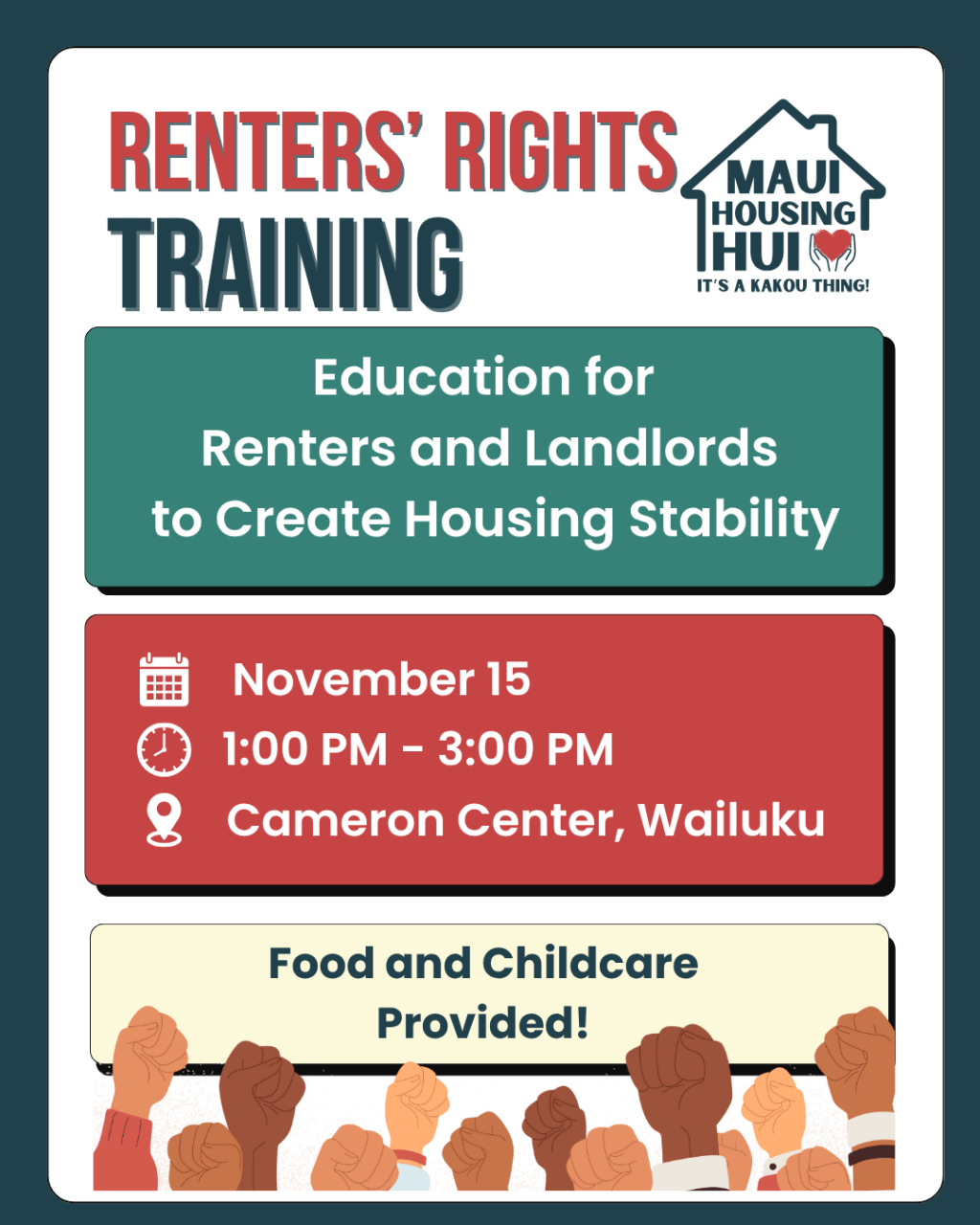

 Maui Housing Hui
Leave a comment