Maximizing Benefits for Landlords and the Community: A Guide to Maui’s $200,000 Property Tax Exemption for Long-Term Leases
As the demand for affordable housing on Maui continues to grow, the Maui Housing Hui is dedicated to supporting both landlords and tenants in building a more sustainable, community-centered approach to housing. A key initiative helping to encourage affordable, stable housing is Maui’s property tax exemption for landlords who offer long-term leases. This exemption allows qualifying landlords to reduce their tax liability by up to $200,000, offering a valuable incentive to provide stable, affordable rental housing on the island. Here’s everything you need to know about this exemption and how it benefits both landlords and the broader community.
What is the Long-Term Lease Property Tax Exemption?
The long-term lease property tax exemption is a benefit available to landlords who commit to renting out their property for an extended period, providing housing stability for tenants. With this exemption, landlords can receive a reduction in their property tax assessment up to $200,000. This exemption is specifically designed to encourage landlords to offer long-term leases, supporting the creation of stable housing options on Maui.
How Does the Exemption Benefit Landlords?
Owning and maintaining rental property can be costly, especially with rising taxes, property management expenses, and maintenance. This exemption provides financial relief by lowering the taxable value of the property, which directly translates to significant savings for landlords. Here’s how landlords can benefit:
- Substantial Tax Savings: By reducing the taxable value of your property by up to $200,000, landlords can enjoy a lower annual property tax bill, making it easier to manage ongoing costs associated with rental property ownership.
- Stable Rental Income: Long-term leases not only qualify you for the tax exemption but also provide a steady income stream, minimizing vacancy periods and providing a reliable financial foundation.
- Community Support and Goodwill: By offering long-term leases, landlords can position themselves as active contributors to Maui’s affordable housing solutions, which can enhance their reputation and tenant relationships.
Who Qualifies for the Tax Exemption?
To qualify for the long-term lease tax exemption, landlords must meet specific criteria:
- Lease Term: The property must be leased for a long term, typically defined as a lease term of at least one year or longer. This ensures that the property is being used to provide stable, affordable housing for residents.
- Property Use: The property must be used as a primary residence by the tenant rather than a vacation rental. This policy supports local residents and families in need of affordable housing, rather than short-term visitors.
- Application: Landlords must apply for the exemption through the Maui County tax office, providing documentation of the lease agreement and tenant occupancy to demonstrate compliance.
How Does This Exemption Benefit the Community?
At the Maui Housing Hui, we believe that affordable housing is a community-wide responsibility. The long-term lease tax exemption is a critical part of a kākou (shared) approach to solving Maui’s housing challenges. Here’s how it supports the community:
- Increases Housing Stability: Long-term leases provide stability for families who are seeking a place to call home. By incentivizing landlords to offer long-term leases, this program helps to create a more stable, sustainable housing environment for Maui residents.
- Supports Local Economy: When landlords save on taxes, they can invest more into their properties and, by extension, the local economy. Whether it’s employing local contractors for maintenance or supporting other Maui-based businesses, every dollar saved can benefit our community.
- Reduces Pressure on Short-Term Rentals: With incentives to provide long-term housing, landlords are more likely to opt out of short-term rental markets, helping to alleviate pressure on housing availability for residents.
How to Apply for the Exemption
If you’re a landlord interested in taking advantage of this tax exemption, the process is straightforward:
- Contact the Maui County Tax Office: Get in touch with the tax office to confirm the necessary documentation and application process. You’ll likely need to provide proof of the lease, the lease term, and tenant occupancy.
- Gather Documentation: Prepare a copy of your long-term lease agreement, tenant information, and other necessary paperwork to prove eligibility.
- Submit Your Application: Applications must be submitted annually, and the deadline is December 31st of each year. Make sure to submit your application on time to ensure you receive the full exemption benefit.
Final Thoughts: Why It’s a Kākou Thing
The Maui Housing Hui is committed to supporting solutions that benefit both landlords and tenants while contributing to Maui’s affordable housing goals. Offering a long-term lease and applying for the property tax exemption doesn’t just help landlords save on costs—it’s a way to actively support the community by providing stable housing opportunities. By working together, we can make a significant impact on housing affordability on Maui.
If you’re a landlord or property owner and would like to learn more about this tax exemption head to https://www.mauicounty.gov/faq.aspx?TID=94. Every action that helps build a community where everyone has access to safe, affordable, and stable housing matters. After all, it’s a kākou thing!

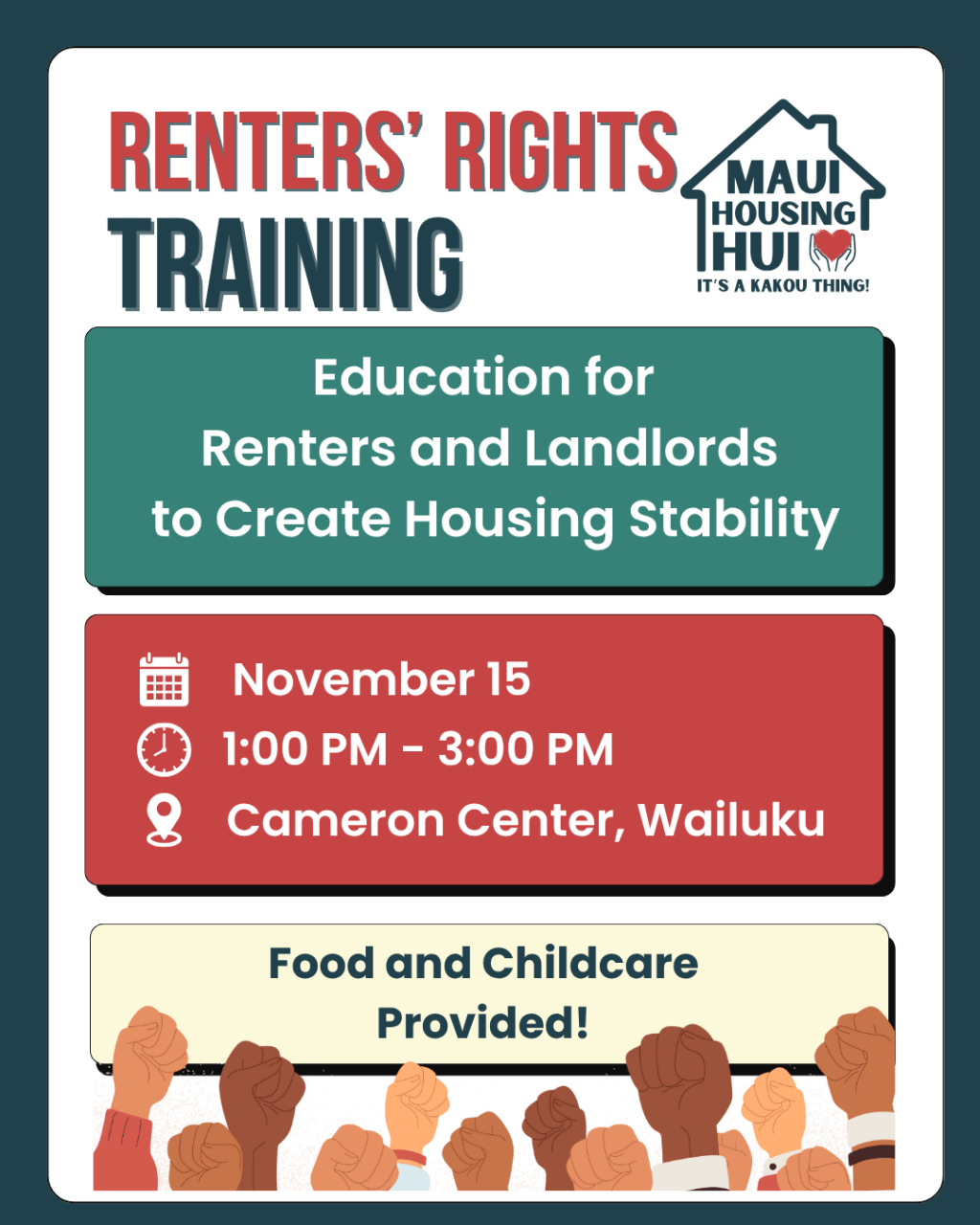

 Maui Housing Hui